Gas Installation Service and Heating System Projects
Gas work has a way of making everyone in the room stand a little straighter. A dripping faucet may annoy you into surrender. A clogged drain may ruin a Saturday. But a gas line? That one gets respect. It should. Gas installation service sits in that serious corner of the trade where plumbing, heating, air movement, appliance setup, and sometimes electrical coordination all start elbowing one another like relatives at a buffet.
The funny part is that customers often think of these jobs as separate creatures. “I need a Plumber.” “I need a Heating contractor.” “I need an Air conditioning contractor.” “I may need an Electrician too, because the furnace has wires and, frankly, wires look smug.” In practice, gas installation and heating system projects often overlap with several disciplines. Plumbing, heating, and air conditioning work are commonly grouped as special trade contractor work, while electrical work is its own separate specialty. That distinction matters, because a good project depends on knowing where one trade ends, where another begins, and where everybody had better talk to each other before someone drills through the wrong thing.
A gas installation service is rarely just “run a pipe and leave.” It can affect the furnace, water heater, heating equipment, ventilation, air conditioning equipment nearby, and the service access future technicians will curse or praise for years. The best installations look boring when they are done. That is the compliment. No drama. No mystery noises. No heroic service call at 9 p.m. Because a rushed connection or poorly coordinated appliance swap has turned the mechanical room into a puzzle box.
The hidden choreography behind gas and heat
Heating system projects are not one-person stage acts. They are closer to theater, except the costumes are worse and everyone owns more wrenches. A Heating contractor may be responsible for installing or maintaining the equipment that keeps the building warm. A Furnace repair service may come in when an existing unit refuses to behave. An HVAC team may deal with heating, ventilation, and air conditioning equipment as a combined system. If the project includes cooling equipment too, an Air conditioning contractor or Air conditioning repair service may need to think about refrigerant, airflow, ductwork, and electrical connections related to that equipment.
The Department of Energy describes HVAC contractors as specialized contractors whose core business includes installing and maintaining heating, ventilation, and air conditioning equipment. That sounds neat on paper. On a real job, neatness tends to wear muddy boots. HVAC work can involve installation, maintenance, repairs, duct cleaning, and the plumbing or electrical work tied to heating and cooling equipment. So when a homeowner asks for a gas furnace installation, the project may include more than a furnace. It may involve gas piping, venting, electrical supply, thermostat wiring, air distribution, equipment sizing, and service clearance.
That last phrase, service clearance, deserves a small round of applause. Future access is one of the most underrated parts of a heating system project. A unit can be installed beautifully from the front and still become a tiny mechanical prison if no one can reach the filter, service panel, shutoff, drain, or electrical disconnect later. The person who installs equipment without thinking about the next repair technician has never been the next repair technician.
Gas installation service also tends to brush up against other parts of a building’s plumbing life. A water heater may need gas. Water heater installation may involve combustion appliances, venting arrangements, water connections, and sometimes coordination with existing plumbing. Water heater repair can reveal problems that began outside the heater itself, such as poor access, aging piping, or a system that has been patched so many times it has developed a personality.
Why “just replace it” is dangerous language
Customers love simple phrases because life is complicated enough already. “Just replace the furnace.” “Just move the gas line.” “Just hook up the water heater.” Contractors hear the word “just” and immediately become suspicious. “Just” has caused more trouble than a raccoon in ductwork.
A heating system project starts with the existing conditions. What equipment is there now? What fuel does it use? What other appliances share the space? What electrical work supports the equipment? What plumbing connections are involved? What ventilation path exists? Is the project limited to heating, or does it interact with cooling as well?
This is where professional judgment matters. HVAC and plumbing trades include many related service categories: air conditioning work, furnace repair, heating equipment installation, plumbing repair, sewer hookups, sump pump service, water pump installation, and refrigeration or freezer work are all recognized within the broad world of plumbing, heating, and air conditioning work. That range explains why a single mechanical room can feel like a committee meeting.
Replacing heating equipment without understanding the surrounding system can create a parade of annoyances. A furnace may be new, but the airflow may still be poor. A heat pump installation may be efficient on paper, but proper installation matters greatly. ENERGY STAR notes that proper HVAC installation includes correct equipment sizing and refrigerant charging, and that proper charging of an air conditioner or heat pump can reduce energy consumption and lower failure risk. That is not decorative fine print. It is the difference between equipment that performs like a professional and equipment that limps through its warranty period like it owes someone money.
The same idea applies to air conditioning. Air conditioning repair is not always about a failed part. Air conditioning maintenance and an air conditioning tune-up can reveal whether the system is clean, charged properly, and operating as intended. Refrigeration-related appliances, including air conditioners and other equipment, fall under federal definitions tied to maintenance, service, repair, and technician work. In plain English, cooling equipment is not a toy, and the person working on it needs to understand the rules of the game.
Gas installation is plumbing work, but not only plumbing work
A Plumber often stands at the center of septic system repair service gas line work because gas piping belongs to the broader world of plumbing and mechanical systems. Plumbing repair and gas work are connected by trade practice, tools, code awareness, and jobsite sequencing. But gas installation service also supports heating equipment, water heaters, and sometimes other appliances tied to the building’s comfort system.
The crossover is where mistakes happen. A plumber may run gas piping to serve a furnace. A heating contractor may install the furnace. An electrician may handle the electrical side. If nobody coordinates, the installation can become a very expensive version of “not my chair, not my problem.” One trade may complete work that blocks another trade’s access. A disconnect may be placed where service becomes awkward. A line may be routed in a way that technically fits but makes future replacement irritating. The customer sees one project. The trades may see three scopes. A good contractor sees both realities and manages the gap.
The best gas installation projects begin with questions, not tools. Where is the equipment going? What are the manufacturer’s installation requirements? What other systems share the space? Is this part of a heating system upgrade, a water heater installation, or a broader remodel? Will an electrician or lighting contractor be working nearby? Lighting contractor may sound unrelated until you realize mechanical rooms and service areas need safe visibility. Nobody wants a technician balancing a flashlight under one armpit while trying to diagnose a furnace. That is how screws disappear forever.
Gas work also has a reputation for making people nervous, and honestly, good. A little nerves can be useful. Complacency is the enemy. The goal is not fear, though. The goal is proper installation, competent service, and clear responsibility. A gas line should be installed as part of a system, not as an isolated pipe that happens to pass through the building.
Heating equipment does not care about your assumptions
Heating systems are stubbornly honest. They do not care what the brochure promised or what the old unit “always did.” They respond to sizing, installation quality, maintenance, airflow, fuel supply, electrical connections, and the physical layout of the building. A furnace repair service can replace parts, but if the installation around the furnace is poor, the system may keep misbehaving like a toddler with a tool belt.
One of the most common project traps is assuming the old setup was correct because it existed for years. Existing does not mean ideal. It may mean tolerated. Older systems often survive through habit, mild weather, forgiving occupants, and technicians who have been quietly nursing them along. When a new heating system is installed, the weak points become harder to ignore. A new unit can expose old duct issues. A revised gas layout can reveal how crowded the mechanical room has become. A water heater replacement can uncover plumbing arrangements that make everyone pause and say, “Well, that’s creative,” which is trade language for “not good.”
Heat pump installation adds another layer. Heat pumps serve heating and cooling roles, so they sit at the intersection of comfort, refrigerant handling, electrical work, and air distribution. Proper sizing and proper refrigerant charging matter, just as they do for air conditioners. A heat pump that is installed casually can become a customer service generator, and not the profitable kind. It may run too often, fail early, or disappoint the owner who expected comfort and got a monthly lesson in regret.
Furnaces have their own project rhythm. They rely on fuel, combustion processes, air movement, controls, and safe venting arrangements. Even without wandering into unsupported specifics, one thing remains clear: furnace work belongs with trained heating professionals who understand equipment installation and maintenance. A furnace repair service is not there merely to swap parts like trading cards. The technician is reading symptoms, checking system behavior, and deciding whether the fault belongs to the equipment, installation, maintenance history, or some neighboring system quietly causing trouble.
The cooling side always finds a way into the conversation
Heating projects often drag air conditioning into the room, even when no one invited it. Many buildings use shared air handlers, ducts, controls, or service spaces. Touch the heating equipment, and suddenly the air conditioning system raises its hand.
An Air conditioning contractor may be needed when the project affects cooling equipment. Air conditioning repair service can become relevant during a heating upgrade if the same system components support both seasons. Air conditioning maintenance may seem unrelated to gas installation, but comfort systems rarely respect calendar boundaries. The day after a furnace project wraps up, someone may ask why the cooling does not feel right. If the heating and cooling systems share infrastructure, that question may be fair.
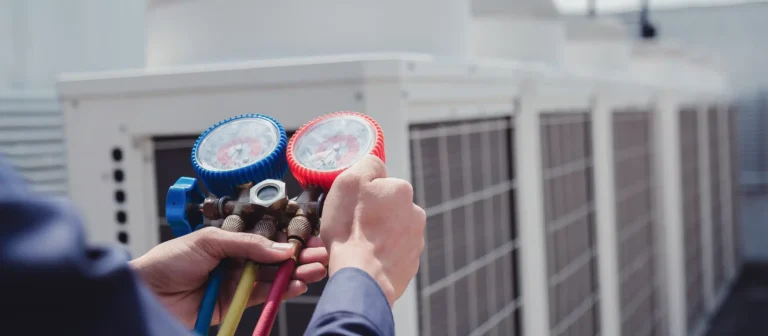
Air conditioning tune-up work usually focuses on keeping cooling equipment operating properly, but it can also reveal installation or maintenance issues that matter during a broader HVAC project. When air conditioners or heat pumps are serviced, technicians must understand the appliance and service requirements tied to refrigeration equipment. The EPA’s Section 608 definitions include air conditioners and other refrigeration equipment under appliance terminology, and technicians involved in maintenance, service, or repair can include installers and contractor employees. Translation for normal people: this is regulated work, not a hobby with gauges.
A strong contractor does not treat cooling as an afterthought during heating work. If equipment shares controls, air movement, or space, the cooling side deserves consideration. Otherwise the customer gets the mechanical equivalent of fixing one shoe and ignoring the other.
The plumbing jobs that sneak in through the side door
A gas installation and heating project can reveal unrelated plumbing problems with impeccable comic timing. The water heater is right there. The floor drain is slow. The pipe near the mechanical room has a stain that looks innocent until touched. The main line has opinions. Suddenly, the heating job has invited Plumbing leak repair, Drain cleaning, Rooter service, Hydrojetting, water heater repair, and perhaps the words no one says cheerfully: plumbing repiping.
Some of these services are adjacent rather than central. Drain cleaning and Rooter service matter when drainage is sluggish or blocked. Hydrojetting is a drain-cleaning method used in appropriate situations by qualified service providers. Septic system service may enter the picture for properties that rely on septic systems rather than municipal sewer connections. Those are not automatically part of gas installation, but a contractor who works around mechanical and plumbing systems should be alert enough to notice when the building is trying to tell a second story.
Water heater installation often ties directly into gas and plumbing. Water heater repair may involve diagnosing whether the issue belongs to the heater, the plumbing connections, the fuel supply, or the installation environment. Water softener installation belongs to the water quality side of plumbing, and while it does not make a furnace warmer or a gas line happier, it may be part of a broader mechanical room plan. Anyone who has worked in cramped utility spaces knows that one new appliance can turn the room into a game of Tetris where all the pieces are expensive.
Plumbing repiping is a larger matter. It should not be casually tacked onto a heating job because someone feels ambitious. But if old piping conditions interfere with a water heater installation or broader utility room upgrade, it may need proper evaluation. Scope creep is dangerous when unmanaged. Managed correctly, it can become project efficiency. The difference is whether the contractor explains what is necessary, what is optional, what can wait, and what should not be ignored.
A practical pre-project conversation
Before a gas installation service or heating system project begins, the best conversations are plainspoken. Nobody benefits from mystical contractor language. The owner needs to know what the work includes, which trades are involved, what equipment is affected, and whether heating, cooling, plumbing, or electrical systems will be touched.
A useful pre-project discussion usually covers these points:
- What equipment is being installed, replaced, serviced, or removed.
- Whether the work affects gas piping, heating equipment, air conditioning equipment, water heating, plumbing, or electrical connections.
- Who is responsible for each trade area, especially if a Plumber, Heating contractor, Air conditioning contractor, or Electrician must coordinate.
- How the installation will allow future access for maintenance and repair.
- Whether existing conditions may change the scope once work begins.
That last item is the one customers dislike, and understandably so. People want a fixed answer. Contractors want one too. Existing buildings, however, have a wicked sense of humor. You open a wall, move equipment, or inspect the old setup, and the building says, “While you’re here…” This is why clear communication matters more than cheerful guessing.
Maintenance is not glamorous, which is why it works
Maintenance has terrible marketing. It lacks the drama of emergency repair and the shiny appeal of new equipment. But air conditioning maintenance, furnace maintenance, and routine heating service prevent many problems from maturing into expensive little monsters.
An air conditioning tune-up can help verify that cooling equipment is ready for the season. Air conditioning repair may still be needed when parts fail or performance drops, but maintenance gives technicians a chance to spot issues sooner. For heat pumps and air conditioners, proper refrigerant charging is part of quality installation and performance. Poor charging can affect energy use and failure risk. Maintenance is not a magic spell, but it is the closest thing mechanical equipment gets to regular exercise and a sensible diet.
Heating maintenance has similar value. Furnaces and other heating systems operate under real workload, and service visits help confirm that equipment is functioning as intended. A Furnace repair service may solve an immediate failure, but maintenance tries to keep the system out of the emergency category. Emergency service has its place, usually during bad weather and at the least convenient hour possible. If equipment could choose timing, it would fail during business hours with fresh coffee available. It rarely does.
Maintenance also protects the customer’s understanding of the system. A technician who visits regularly can notice changes. A new sound. A dirty component. A control issue. A filter access problem. A drain concern. This kind of observation is not glamorous, but neither is bailing water with a cereal bowl because a small problem went feral.
When electrical work joins the party
Electrical work is separately classified from plumbing, heating, and air conditioning work, and that distinction deserves respect. Heating and cooling equipment often needs electrical connections, controls, disconnects, and safe service access. That does not mean every plumbing or HVAC technician is the right person to perform every electrical task. It means competent project planning identifies when an Electrician is needed.
The same logic applies to a Lighting contractor in certain spaces. Lighting may not sound central to gas installation, but serviceability matters. Mechanical rooms, basements, utility closets, and commercial service areas all benefit from lighting that lets technicians see what they are doing. If you have ever tried to read a model plate in poor light while crouched beside equipment, you know the human spine has limits and resentment.
The electrical side also affects heat pump installation and air conditioning work. Cooling equipment and heat pumps have specific installation and service needs, including proper charging and correct setup. Electrical coordination helps prevent delays and avoids turning a clean installation into a return trip festival.
The contractor’s real product is judgment
The visible product may be a gas line, furnace, water heater, air conditioner, or heat pump. The real product is judgment. Anyone can admire a neat installation after it is finished. The harder part happened earlier, during assessment and planning.
Good judgment asks whether the equipment is correctly sized, whether the installation supports proper operation, whether refrigerant-related equipment is handled appropriately, whether future maintenance is realistic, and whether other trades need to be involved. It also asks whether the requested job is truly the right job. Sometimes the customer asks for air conditioning repair when air conditioning maintenance would have prevented the issue months earlier. Sometimes a water heater repair makes sense. Sometimes water heater installation is the better path. Sometimes drain cleaning is enough. Sometimes rooter service or hydrojetting may be considered by qualified providers after evaluating the blockage. Sometimes plumbing leak repair is a quick fix, and sometimes it is a warning flare for broader plumbing repiping.
A contractor who never says “it depends” is either inexperienced or selling something. “It depends” is not evasive when followed by a clear explanation. It depends on equipment condition. It depends on installation requirements. It depends on the surrounding systems. It depends on whether the job touches gas, plumbing, heating, cooling, refrigeration, electrical work, or all of the above in one crowded closet with a spider supervising.
The comedy of the mechanical room
Every trade has its theater. For plumbing and HVAC, the mechanical room is where the jokes write themselves. Someone stored paint cans in front of the furnace panel. A mop bucket blocks the water heater. The air filter slot faces a wall because apparently filters enjoy riddles. The shutoff is technically visible if you have the neck flexibility of an owl. None of this is rare.
The best installations fight that chaos from day one. They leave room for service. They make equipment relationships logical. They avoid treating maintenance access as optional. They consider heating and air conditioning together when the systems overlap. They respect the separation between plumbing and electrical specialties. They do not pretend gas installation is merely pipework without consequences.
A mechanical system should be understandable. Not simplistic, but understandable. A technician should be able to identify what serves what, where connections go, and how equipment can be maintained. The owner should receive enough explanation to know what was done and what future service may involve. Mystery is wonderful in novels. It is less charming in utility rooms.
Choosing the right help without needing a trade dictionary
Most customers do not need to know every classification or specialty boundary. They do need to hire people who do. If the project involves gas piping and heating equipment, look for a provider experienced in gas installation service and heating system work. If cooling equipment is affected, an Air conditioning contractor or Air conditioning repair service may belong in the conversation. If electrical connections are part of the scope, involve an Electrician. If plumbing issues appear, from plumbing leak repair to water heater installation, make sure the plumbing side is properly handled.
A balanced contractor will not force every keyword into the job like a bad résumé. Septic system service, water softener installation, hydrojetting, heat pump installation, and lighting work all have their place, but not every project needs them. The mark of professionalism is knowing what belongs and what does not.
Here is the simplest way to think about it:
- Gas installation service should be planned with the appliance and future service in mind.
- Heating system projects often involve HVAC, plumbing, and sometimes electrical coordination.
- Air conditioning and heat pump work require proper installation practices, including attention to sizing and refrigerant charging.
- Maintenance reduces surprises, though it cannot abolish them entirely.
- A contractor’s judgment matters as much as the equipment installed.
The last point is the expensive one. Equipment has specifications. Buildings have conditions. Customers have budgets. Good contractors live in the space where those three realities argue.
The project that feels quiet afterward
The best gas installation and heating system project is not the one everyone talks about for weeks. It is the one that fades into normal life. The heat comes on. The water heater does its job. The air conditioning is ready when its season arrives. The service panels are reachable. The electrical work supports the equipment properly. The plumbing is not leaking in the corner like it has a secret.
That quiet outcome takes planning. It takes respect for trade boundaries and coordination between specialties. It takes understanding that plumbing, heating, and air conditioning work often share space and consequences, even when electrical work remains a distinct trade. It takes the humility to inspect before assuming and the discipline to install for the technician who will return years later.
Gas installation service and heating system projects are not glamorous in the showroom sense. They are better than glamorous. They are practical, technical, and deeply satisfying when done correctly. A well-executed job gives a building comfort without theatrics. And in this trade, no theatrics is usually the highest compliment available.
Name: Service Lion Plumbing Heating Air Electric
Address: 521 W Briardale Ave, Orange, CA 92865, United States
Phone: (657) 567-7305
Website: https://callservicelion.com/
Email: [email protected]
Hours:
Monday: Open 24 hours
Tuesday: Open 24 hours
Wednesday: Open 24 hours
Thursday: Open 24 hours
Friday: Open 24 hours
Saturday: Open 24 hours
Sunday: Open 24 hours
Open-location code: R48R+WV Orange, California, USA
Map/listing URL:
https://www.google.com/maps/search/?api=1&query=Google&query_place_id=ChIJQU4LBWHV3IARtnABtyykSA4
Google Map:
Socials:
https://www.facebook.com/ServiceLionCA/
https://www.youtube.com/channel/UCR_L35QzsRTxYZtX8PxJvPw
Local Service Information
Service Lion Plumbing Heating Air Electric provides plumbing, drain, heating, air conditioning, and electrical services from its Orange, California location.The company serves homeowners and properties throughout Orange and communities across Orange County and surrounding areas.
Available services include plumbing repairs, water heater work, drain and sewer services, heating and cooling service, electrical repairs, panels, lighting, outlets, and related home-system work.
Service is available for residential properties as well as light commercial needs described within the company's local service-area information.
The company's website emphasizes locally operated service, coordinated home-system support, and practical scheduling for plumbing, HVAC, and electrical needs.
The matching public business listing shows the Orange location as open 24 hours a day, seven days a week.
For service information or scheduling, call (657) 567-7305 or visit https://callservicelion.com/.
The public map listing identifies the business at 521 W Briardale Ave, Orange, CA 92865 and can be used for location and direction information.
Popular Questions About Service Lion Plumbing Heating Air Electric
What services does Service Lion Plumbing Heating Air Electric provide?
The company provides plumbing, drain and sewer, heating, air conditioning, and electrical services. Its published services include plumbing repair, water heaters, drain clearing, sewer work, HVAC repair and installation, electrical repairs, panels, circuit breakers, lighting, outlets, and related services.
Where is Service Lion Plumbing Heating Air Electric located?
The matching business location is 521 W Briardale Ave, Orange, CA 92865, United States.
What areas does Service Lion Plumbing Heating Air Electric serve?
The company serves Orange County and surrounding communities. Its published service-area information includes Orange, Anaheim, Brea, Yorba Linda, Fullerton, Huntington Beach, Newport Beach, Costa Mesa, Irvine, Lake Forest, and additional nearby cities.
Is Service Lion Plumbing Heating Air Electric open 24 hours?
The matching public business listing shows the location as open 24 hours on Monday through Sunday.
Does Service Lion Plumbing Heating Air Electric work on drains and sewer lines?
Yes. Published services include drain clearing, rooter service, camera inspection, hydro jetting, sewer line repair and installation, water line work, slab leak detection, and trenchless sewer line repair.
Does Service Lion Plumbing Heating Air Electric provide heating and air conditioning service?
Yes. Its published HVAC services include air conditioning repair and installation, heating service, furnace work, heat pumps, air ducts, indoor air quality assessments, and thermostat installation.
Does Service Lion Plumbing Heating Air Electric provide electrical service?
Yes. Published electrical services include repairs and installations, electrical panels, circuit breakers, safety inspections, lighting, outlets and switches, surge protection, generators, and EV charging equipment installation.
How can I contact Service Lion Plumbing Heating Air Electric?
Call (657) 567-7305.
Email: [email protected]
Website: https://callservicelion.com/
Facebook: https://www.facebook.com/ServiceLionCA/
Landmarks Near Orange, California
Old Towne Orange Historic District
A central historic district and useful geographic reference point for the Orange community.
Plaza Park
A well-known public gathering point in the center of Old Towne Orange.
Orange Public Library & History Center
A civic landmark serving residents near central Orange.
Hart Park
A major public park and recreation area south of central Orange.
Eisenhower Park
A public park serving neighborhoods in northern Orange.
Santiago Oaks Regional Park
A regional recreation and open-space landmark on the eastern side of Orange.
Irvine Regional Park
A large regional park and recognizable reference point east of the city.
Orange Park Acres
A distinctive residential community and service-area reference point in eastern Orange.
El Modena
An established Orange neighborhood that provides a practical local coverage reference.
Glassell Street
One of the city's principal north-south streets and a useful route through central Orange.
Lincoln Avenue
A major east-west roadway serving northern Orange and nearby communities.
State Route 55
A primary regional freeway connecting Orange with other parts of Orange County.