How an Electrician Supports Heating and Cooling Equipment
A heating or cooling system is a bit like a stage production. The furnace, air conditioner, or heat pump gets the applause, the thermostat gets blamed for everything, and the ductwork hides in the walls like a shy bass player. But behind the curtain, electricity keeps the whole show from becoming an expensive metal sculpture.
That is where an electrician earns a seat at the table.
Heating and cooling equipment may be the daily territory of a Heating contractor or Air conditioning contractor, but modern HVAC work does not live in one neat little box. The U.S. Department of Energy describes HVAC contractors as specialists who install and maintain heating, ventilation, and air-conditioning equipment, and those services can include plumbing and electrical work tied to that equipment. OSHA also treats plumbing, heating, and air-conditioning as a special trade category, while electrical work has its own separate classification. Translation for homeowners: these trades overlap, but they are not the same animal. A good job depends on knowing when to bring in the person with the right tools, license, training, and instincts.
And when heating and cooling equipment needs safe, reliable power, the electrician is not optional decoration. They are the person making sure the equipment can start, stop, communicate, and run without turning your utility room into a cautionary tale.
HVAC equipment is not just “plug it in and hope”
People sometimes imagine heating and cooling equipment as a simple appliance swap. Old unit out, new unit in, everyone high-fives, the dog barks at the installer, done by lunch. Sometimes the job is straightforward. Often, it is not.
Air conditioners, furnaces, heat pumps, and related equipment depend on electrical circuits, controls, disconnects, safety devices, and wiring that must suit the specific installation. Proper HVAC installation is not only about setting equipment in place. ENERGY STAR notes that quality installation includes correct equipment sizing and refrigerant charging, and proper charging can reduce energy use and lower failure risk. Those details belong heavily to the HVAC side of the work. But even perfectly selected and properly charged equipment still needs the right electrical support.
An Air conditioning repair service may diagnose a system that will not cool. A Furnace repair service may find a heating unit that refuses to start. A Heating contractor may recommend replacement because the existing system is no longer practical to maintain. In each case, electrical conditions can affect what happens next. If the equipment does not receive the correct power or the controls cannot communicate properly, the symptoms may look like an HVAC failure even when the root problem sits in wiring or electrical components.
That is the first useful lesson: heating and cooling failures are not always “heating and cooling” failures in the narrow sense. The system is a team sport. Unfortunately, unlike actual team sports, the equipment cannot hold a press conference and explain what went wrong.
Where the electrician fits in the HVAC orchestra
An electrician supports heating and cooling equipment by handling the electrical work associated with installation, service, replacement, and repairs. That may sound obvious, but it matters because HVAC work sits at a busy intersection. The same company or project may involve an Air conditioning contractor, Heating contractor, Plumber, Electrician, and sometimes a Gas installation service depending on the equipment and building needs.
For example, a furnace may involve heating equipment, electrical connections, and gas service. An air conditioner involves cooling equipment and electrical support. A heat pump installation may involve both heating and cooling functions, along with electrical service to support the system. If a home is also getting Water heater installation, Plumbing repiping, or Water softener installation, the project can quickly become a parade of trades. If the parade is organized, everyone waves nicely. If it is not, someone parks a truck in the wrong place and suddenly nobody can reach the crawlspace.
The electrician’s job is to make sure the heating and cooling equipment has power and control wiring appropriate to the work being done. They may coordinate with the HVAC technician during installation, replacement, or troubleshooting. The HVAC technician handles the heating, cooling, ventilation, refrigerant, airflow, combustion, and equipment-specific service side. The electrician handles the electrical side. In some companies, technicians may have cross-training for certain tasks connected with HVAC equipment. Still, the distinction matters. Electrical work is separately classified because it has its own risks, standards, and technical demands.
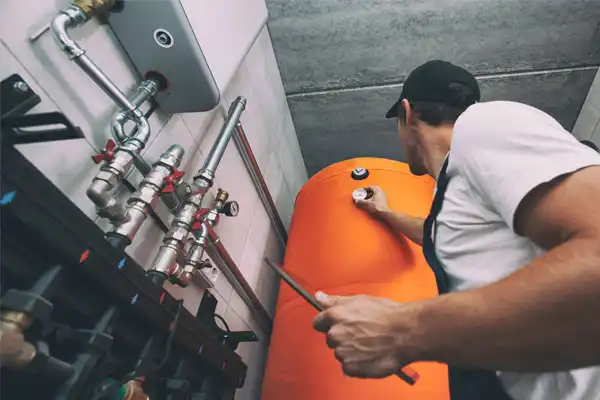
A good electrician does not try to become the refrigeration expert on the spot. A good HVAC technician does not treat electrical work like a side quest. The best results happen when each trade respects the other’s lane and communicates before drywall, cabinets, landscaping, or somebody’s heroic shelving unit makes access miserable.
The invisible chain between thermostat and equipment
The thermostat looks harmless. It sits on the wall, quietly judging your family’s comfort preferences. Yet it begins the chain of events that makes heating and cooling equipment operate. When the thermostat calls for heat or cooling, the equipment must respond through control wiring and electrical components. If that chain is interrupted, the system may sit there like it is contemplating retirement.
This is why electrical support matters during Air conditioning repair and Furnace repair service. A cooling complaint may begin with warm air at the vents, but the repair path may include confirming whether the equipment is being told to run and whether it has the electrical support to do so. A heating complaint may sound like “the furnace is dead,” which is not exactly a technical diagnosis, though homeowners do tend to deliver it with conviction. The professional still has to determine whether the issue belongs to power, controls, equipment, fuel, airflow, or some combination.
An electrician can help when the problem points to wiring, circuit issues, or electrical components outside the HVAC technician’s scope. This coordination keeps the repair from becoming a guessing contest. Guessing is expensive. Guessing also has a nasty habit of replacing parts that were never broken, which is wonderful for nobody except the box the part came in.
During an Air conditioning tune-up or Air conditioning maintenance visit, the HVAC technician may focus on cooling performance, condition of the equipment, refrigerant-related factors within their responsibilities, and general operating behavior. If something electrical appears questionable beyond the HVAC service scope, an electrician may be the right person to address it. That handoff is not a failure. It is professionalism with a tool belt.
Installation is where small shortcuts grow teeth
Replacement equipment often exposes old assumptions. A previous system may have been installed under different expectations, or the building may have changed over time. Additions, remodels, extra appliances, finished basements, lighting upgrades, and other changes can alter the practical context in which heating and cooling equipment operates. The equipment chosen today must be installed properly today, not merely squeezed into yesterday’s setup with crossed fingers.
Correct sizing matters for HVAC equipment. So does proper refrigerant charging for air conditioners and heat pumps. But electrical readiness also matters. If the equipment requires electrical work associated with its installation, Plumber that work needs someone qualified to do it. This is especially important with Heat pump installation, where the equipment may serve both heating and cooling roles. The system’s performance depends on a series of correct choices, and electrical support is one of them.
Think of it like fitting a new kitchen range. You would not choose a beautiful new appliance and then shrug at whether the utilities serving it are right. Heating and cooling equipment deserves the same respect, partly because comfort is involved, partly because efficiency is involved, and partly because nobody enjoys learning the phrase “we need to open that wall again.”
A well-coordinated installation typically considers several practical questions before the equipment is fully committed to its new home:
- Does the equipment have appropriate electrical support for the installation?
- Are the control connections suitable for the system being installed?
- Is there safe, serviceable access for future maintenance and repair?
- Do HVAC and electrical tasks need to happen in a specific order?
- Has the work been coordinated with any plumbing, gas, or ventilation needs?
That list is short because the actual work is not a checklist taped to a clipboard. It is judgment, inspection, and coordination. Still, those questions prevent many avoidable headaches. The most elegant installation is rarely the one where everyone improvises at the last minute while standing in a puddle.
Why HVAC contractors and electricians need each other
The Department of Energy describes HVAC contractor services as including installation, maintenance, repairs, duct cleaning, and plumbing or electrical work associated with heating and cooling equipment. That is a useful description because it reflects the real-life messiness of buildings. Systems do not exist in isolation. A furnace may share a utility space with a water heater. An air conditioner may sit near outdoor electrical equipment. A heat pump may connect comfort needs across seasons. A Plumber may be working nearby on Water heater repair or Plumbing leak repair while an HVAC technician is dealing with comfort equipment.
Even OSHA’s plumbing, heating, and air-conditioning classification includes a broad spread of work: air-conditioning work, furnace repair, heating equipment installation, plumbing repair, refrigeration and freezer work, sewer hookups, sump pump service, and water pump installation. It is a wide neighborhood. Electrical work, however, remains separately classified, which is exactly why coordination matters.
A contractor who understands this does not pretend one badge covers every task. They schedule the right people. They know when a Lighting contractor belongs on a project and when an Electrician should address equipment power. They know a Septic system service has nothing to do with your air conditioner, unless a truly spectacular planning error has occurred. They know Drain cleaning, Rooter service, and Hydrojetting belong to drainage problems, not cooling complaints, even if all three pipe leak repair involve unpleasant noises from somewhere in the house.
That may sound obvious, but homeowners often call with a symptom, not a trade category. “The basement smells weird.” “The air is warm.” “The breaker keeps tripping.” “The furnace clicks.” “There’s water by the unit.” One symptom may involve HVAC, plumbing, electrical, or more than one. A good service business sorts that out without making the homeowner become a project manager overnight.
The repair call that starts with HVAC and ends with wiring
Picture a common service scene. The homeowner calls for Air conditioning repair because the house is not cooling. The Air conditioning repair service arrives expecting a cooling issue. The technician checks the equipment and finds that part of the system is not operating as commanded. At that point, the issue may still be inside the HVAC equipment, or it may involve the electrical supply or controls.
This is where discipline matters. A less careful approach keeps poking at the air-conditioning equipment because that is what the call was labeled. A better approach follows the evidence. If the evidence points to electrical work outside the HVAC technician’s scope, bring in the electrician. The customer may not care which trade solves it. They care that the system works and nobody uses their utility room as a laboratory for expensive theories.
The reverse happens too. A homeowner may call an electrician because equipment seems dead. The electrician may confirm electrical support up to a point, then recommend an HVAC technician for equipment-specific diagnosis. Nobody has lost face. Buildings are complicated, and equipment has boundaries. The real mark of competence is not pretending to know everything. It is knowing what belongs where.
The same logic applies to heating. A furnace that refuses to run may need furnace-specific service, electrical troubleshooting, gas-related attention, or some mix of those. If gas work is involved, a Gas installation service or appropriately qualified professional may be part of the picture. If the heating equipment itself needs repair, the Furnace repair service or Heating contractor leads that side. If wiring or electrical support is suspect, the electrician steps in. The furnace, naturally, offers no apology for making everyone collaborate.
Maintenance is not glamorous, which is why it works
Air conditioning maintenance and an Air conditioning tune-up do not have the dramatic flair of an emergency repair. No one bursts through the door shouting, “At last, routine service!” Still, maintenance often catches small problems before they become large ones. It also gives technicians a chance to notice whether the equipment is operating as expected and whether anything around it deserves attention.
The electrical role during maintenance is usually about support and follow-through. If an HVAC technician observes signs that suggest an electrical issue, an electrician may be needed to evaluate and correct it. That might happen during cooling maintenance, heating maintenance, or while preparing equipment for seasonal use. The point is not that every tune-up requires an electrician standing nearby with a heroic expression. The point is that maintenance should not ignore electrical clues simply because the appointment title says “AC.”
There is a trade-off here. Homeowners do not want every minor service visit to become a multi-trade production. Fair enough. Nobody wants to book three contractors because a thermostat blinked. But when a legitimate electrical concern appears, delaying it can make the eventual repair more disruptive. Judgment matters. So does clear communication. “This is fine for now, watch it” is different from “this needs an electrician before we keep running the equipment.” A professional should explain the difference without theatrical fog machines.
When plumbing and HVAC share the same mechanical room
Many service businesses handle plumbing and HVAC under one roof because the work often lives in the same physical spaces. That does not make the trades interchangeable. It just means your mechanical room is a crowded little city.
A Plumber may be there for Plumbing leak repair, Water heater repair, Water heater installation, Drain cleaning, Rooter service, Hydrojetting, Plumbing repiping, or Water softener installation. An HVAC technician may be there for Air conditioning repair, Air conditioning maintenance, a heat pump, a furnace, or ventilation-related work. An Electrician may be needed for electrical support associated with heating and cooling equipment. If everyone understands the project, the sequence can be smooth. If not, one trade may finish beautifully while accidentally making life harder for the next one.
For instance, equipment needs service access. Future technicians should be able to reach panels, controls, and related components without dismantling half the room. This is a practical matter, not just a neatness preference. Heating and cooling equipment will need maintenance. Water heaters will need service. Plumbing systems may need repairs. Electrical components must remain accessible where required. The best installers think about the poor soul who will return years later on a cold evening, flashlight in teeth, trying not to say rude things in front of the homeowner’s children.
Coordination also helps avoid confusion. Water near HVAC equipment might come from a plumbing issue, cooling-related condensate, or another source. A drain problem may need Drain cleaning or Rooter service, while a cooling complaint may need an Air conditioning contractor. Water heater trouble is not furnace trouble, even if both occupy the same room and both enjoy failing at inconvenient times. A broad service company can be helpful precisely because it can route the problem to the right department.
The electrician and the heat pump
Heat pumps deserve special mention because they blur the old mental line between “the heater” and “the air conditioner.” A heat pump can provide heating and cooling, so Heat pump installation often involves comfort planning across more than one season. The HVAC contractor must address equipment selection, installation, and performance factors. ENERGY STAR’s emphasis on correct sizing and refrigerant charging applies strongly here because performance and reliability depend on getting the fundamentals right.
The electrician’s support focuses on the electrical work associated with the equipment. Since the heat pump may become a central comfort system for much of the year, the quality of that support is not a minor detail. A problem that affects operation can show up as poor heating, poor cooling, inconsistent performance, or failure to run. The symptom may change with the season, which is very considerate of the equipment if its goal is to confuse everyone.
Good heat pump projects avoid silo thinking. The Air conditioning contractor or Heating contractor should not treat electrical needs as an afterthought, and the electrician should understand that the equipment’s function depends on coordinated controls and installation requirements. The homeowner should not be left translating between trades like a diplomat at a summit over a thermostat.
What homeowners should listen for during service
The best service conversations have a certain texture. The technician asks what happened, when it happened, what changed recently, and whether the issue is constant or intermittent. They do not leap straight to the most expensive possibility with the confidence of a game show host. They also do not dismiss the homeowner’s observations. Homeowners may not know the trade terminology, but they often know the timeline better than anyone.
A homeowner describing “the AC stopped after that other work was done” may be offering a useful clue. So might “the furnace only acts up after a storm,” “the thermostat goes blank,” or “the outdoor unit sounds like it tries to start but does not.” Those statements do not prove an electrical issue, but they help direct a professional evaluation.
There are also moments when a homeowner should expect coordination rather than a one-person miracle. If an HVAC technician says the equipment problem appears to involve electrical work beyond their scope, that is not a dodge. If an electrician says the equipment itself needs an HVAC diagnosis, that is not a dodge either. It is the adult version of staying in your lane, with fewer traffic cones.
A useful homeowner checklist is brief:
- Describe the symptom and when it began.
- Mention recent HVAC, plumbing, electrical, or remodeling work.
- Ask whether the issue appears equipment-related, electrical, plumbing-related, or uncertain.
- Request a clear explanation before approving repairs.
- Keep service access around heating, cooling, plumbing, and electrical equipment as clear as practical.
That last point sounds dull until a technician has to move holiday decorations, paint cans, luggage, and a suspiciously heavy box labeled “misc.” Comfort systems work better when people can actually reach them.
The business advantage of cross-trade awareness
For a contractor that handles plumbing and HVAC work, having strong relationships with electrical professionals is more than convenient. It improves diagnosis, scheduling, installation quality, and customer trust. Since HVAC services can include electrical work associated with heating and cooling equipment, a company must know how that work is handled, who performs it, and when it is required.
This matters in both residential and commercial settings. ACCA, a national trade association referenced by federal energy agencies, represents contractors who design, install, maintain, and service HVACR systems across residential, commercial, industrial, institutional, and governmental buildings. The scale changes, but the principle stays the same: heating and cooling equipment depends on proper installation and maintenance, and electrical support is part of the ecosystem.
Customers notice when trades coordinate well. They may not know the technical details, but they recognize when the left hand knows what the right hand is doing. They also recognize the opposite, usually around the time two technicians stare at the same wall and say, “Who put that there?”
A plumbing and HVAC company that communicates honestly can say, “We can handle the HVAC repair, and we’ll bring in electrical support for that portion,” or “This looks like a plumbing issue rather than an air-conditioning issue,” or “The water heater work and heating equipment work need to be sequenced so access stays open.” That kind of clarity feels refreshingly rare because it is. It also saves customers from calling half the trades in town and explaining the same noise five times.
Refrigerant, repairs, and the limits of “close enough”
Air conditioners and heat pumps are regulated appliances in the sense that federal rules define appliances under refrigerant-related regulations to include air conditioners and other refrigeration equipment. Technicians involved in maintenance, service, or repair can include installers and contractor employees. That matters because cooling equipment is not just a fan in a box. Refrigerant-related service has its own rules and responsibilities.
The electrician’s role does not replace that. Electrical support does not mean handling refrigerant. Air conditioning repair service requires the right HVAC qualifications for the cooling side. The same is true for air-conditioning installation, maintenance, and tune-ups. The electrician supports the equipment by handling the electrical work associated with it, not by pretending refrigerant charging is a casual hobby.
That separation protects the customer. It keeps work assigned to people trained for that work. It also protects the equipment. Proper refrigerant charging can reduce energy consumption and lower failure risk, according to ENERGY STAR guidance on quality installation. That is not a detail to be guessed at. Likewise, electrical work is not something to wave away because the system “almost runs.” Almost running is what equipment does right before it becomes a weekend emergency.
The comfort system as a collection of promises
A heating and cooling system makes several promises. It promises comfort when the weather gets rude. It promises reasonable efficiency when installed and maintained properly. It promises serviceability, at least if the original installers had mercy. It promises safety when each trade does its job correctly.
The electrician supports those promises by ensuring the electrical side of heating and cooling equipment is handled properly. The HVAC contractor supports them through equipment selection, installation, maintenance, repair, refrigerant-related responsibilities, airflow, ventilation, and system performance. The Plumber supports nearby systems that may share space, drainage, water service, or equipment rooms. Gas professionals support gas-related needs where applicable. None of these roles is decorative.
The witty version is simple: your furnace may make the heat, your air conditioner may make the cool, but electricity makes both of them stop being furniture.
The practical version is better: heating and cooling equipment works best when the trades coordinate from the beginning, respect each other’s scope, and treat installation and repair as a system rather than a single box. If you are hiring for Air conditioning repair, Furnace repair service, Heat pump installation, Air conditioning maintenance, or any project that touches the mechanical room, pay attention to how the contractor talks about electrical support. Do they recognize when an Electrician is needed? Do they explain the boundary between HVAC work and electrical work? Do they coordinate with plumbing or gas service when the job calls for it?
Those answers tell you a lot.
Comfort equipment does not care what the invoice category says. It only cares whether the right work was done correctly. The homeowner, naturally, cares about that too, plus whether the house is comfortable, the repair makes sense, and nobody leaves muddy footprints shaped like regret. A skilled electrician, working alongside a capable Heating contractor or Air conditioning contractor, helps make that happen.
Name: Service Lion Plumbing Heating Air Electric
Address: 521 W Briardale Ave, Orange, CA 92865, United States
Phone: (657) 567-7305
Website: https://callservicelion.com/
Email: [email protected]
Hours:
Monday: Open 24 hours
Tuesday: Open 24 hours
Wednesday: Open 24 hours
Thursday: Open 24 hours
Friday: Open 24 hours
Saturday: Open 24 hours
Sunday: Open 24 hours
Open-location code: R48R+WV Orange, California, USA
Map/listing URL:
https://www.google.com/maps/search/?api=1&query=Google&query_place_id=ChIJQU4LBWHV3IARtnABtyykSA4
Google Map:
Socials:
https://www.facebook.com/ServiceLionCA/
https://www.youtube.com/channel/UCR_L35QzsRTxYZtX8PxJvPw
Local Service Information
Service Lion Plumbing Heating Air Electric provides plumbing, drain, heating, air conditioning, and electrical services from its Orange, California location.The company serves homeowners and properties throughout Orange and communities across Orange County and surrounding areas.
Available services include plumbing repairs, water heater work, drain and sewer services, heating and cooling service, electrical repairs, panels, lighting, outlets, and related home-system work.
Service is available for residential properties as well as light commercial needs described within the company's local service-area information.
The company's website emphasizes locally operated service, coordinated home-system support, and practical scheduling for plumbing, HVAC, and electrical needs.
The matching public business listing shows the Orange location as open 24 hours a day, seven days a week.
For service information or scheduling, call (657) 567-7305 or visit https://callservicelion.com/.
The public map listing identifies the business at 521 W Briardale Ave, Orange, CA 92865 and can be used for location and direction information.
Popular Questions About Service Lion Plumbing Heating Air Electric
What services does Service Lion Plumbing Heating Air Electric provide?
The company provides plumbing, drain and sewer, heating, air conditioning, and electrical services. Its published services include plumbing repair, water heaters, drain clearing, sewer work, HVAC repair and installation, electrical repairs, panels, circuit breakers, lighting, outlets, and related services.
Where is Service Lion Plumbing Heating Air Electric located?
The matching business location is 521 W Briardale Ave, Orange, CA 92865, United States.
What areas does Service Lion Plumbing Heating Air Electric serve?
The company serves Orange County and surrounding communities. Its published service-area information includes Orange, Anaheim, Brea, Yorba Linda, Fullerton, Huntington Beach, Newport Beach, Costa Mesa, Irvine, Lake Forest, and additional nearby cities.
Is Service Lion Plumbing Heating Air Electric open 24 hours?
The matching public business listing shows the location as open 24 hours on Monday through Sunday.
Does Service Lion Plumbing Heating Air Electric work on drains and sewer lines?
Yes. Published services include drain clearing, rooter service, camera inspection, hydro jetting, sewer line repair and installation, water line work, slab leak detection, and trenchless sewer line repair.
Does Service Lion Plumbing Heating Air Electric provide heating and air conditioning service?
Yes. Its published HVAC services include air conditioning repair and installation, heating service, furnace work, heat pumps, air ducts, indoor air quality assessments, and thermostat installation.
Does Service Lion Plumbing Heating Air Electric provide electrical service?
Yes. Published electrical services include repairs and installations, electrical panels, circuit breakers, safety inspections, lighting, outlets and switches, surge protection, generators, and EV charging equipment installation.
How can I contact Service Lion Plumbing Heating Air Electric?
Call (657) 567-7305.
Email: [email protected]
Website: https://callservicelion.com/
Facebook: https://www.facebook.com/ServiceLionCA/
Landmarks Near Orange, California
Old Towne Orange Historic District
A central historic district and useful geographic reference point for the Orange community.
Plaza Park
A well-known public gathering point in the center of Old Towne Orange.
Orange Public Library & History Center
A civic landmark serving residents near central Orange.
Hart Park
A major public park and recreation area south of central Orange.
Eisenhower Park
A public park serving neighborhoods in northern Orange.
Santiago Oaks Regional Park
A regional recreation and open-space landmark on the eastern side of Orange.
Irvine Regional Park
A large regional park and recognizable reference point east of the city.
Orange Park Acres
A distinctive residential community and service-area reference point in eastern Orange.
El Modena
An established Orange neighborhood that provides a practical local coverage reference.
Glassell Street
One of the city's principal north-south streets and a useful route through central Orange.
Lincoln Avenue
A major east-west roadway serving northern Orange and nearby communities.
State Route 55
A primary regional freeway connecting Orange with other parts of Orange County.